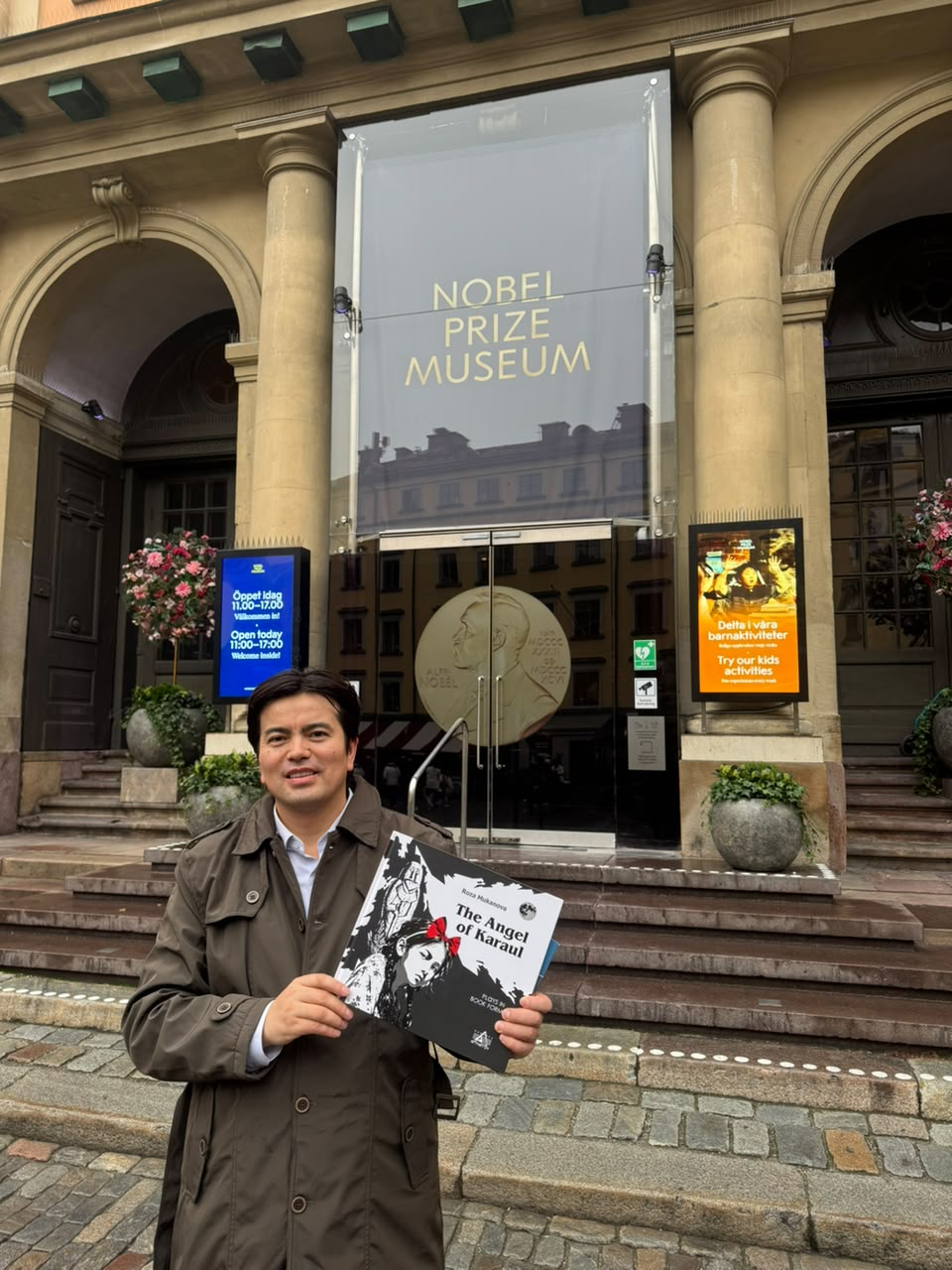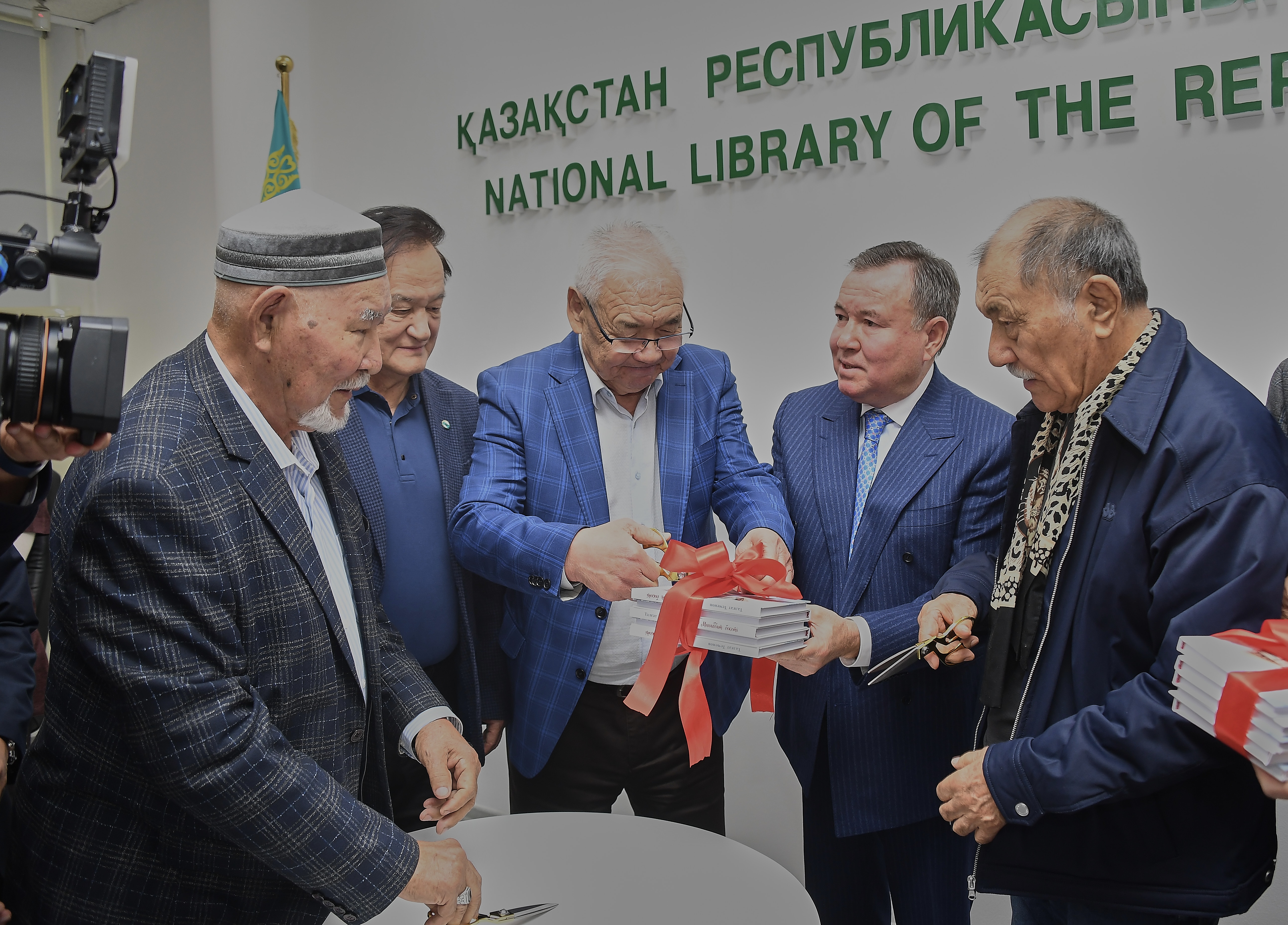
A collection of works by Kazakh authors, published in several languages, has been presented to the Nobel Library of the Swedish Academy in Stockholm.
Among them is The Angel of Karaul, the English-language edition of Mäñgilik Bala Beine, a theatrical book by distinguished Kazakh writer and playwright Roza Mukanova, published by Arman-PV.
The presentation comes in a year of profound historical significance for Kazakhstan, marking the 35th anniversary of the closure of the Semipalatinsk Nuclear Test Site. Rooted in the human tragedy of nuclear testing, Mukanova’s work now enters an important international literary institution, bringing a defining chapter of Kazakhstan’s history to a wider audience.
Literature as a Bridge Between Cultures
The books were delivered to Stockholm by Duisenali Alimakyn, a journalist at Egemen Qazaqstan, poet and researcher, who visited Sweden at the special invitation of the Swedish Academy.
During his research visit, Alimakyn worked with materials held in the Nobel Library and the Academy’s archives. He also took the opportunity to introduce works by Kazakh authors to the institution.
According to Alimakyn, books by Kazakh writers had not previously reached the library. The newly presented publications represent an opportunity to bring Kazakhstan’s literary heritage to the attention of international scholars, translators and readers, opening new avenues for literary exchange and research.
Among these works, The Angel of Karaul holds particular historical and emotional significance.
Set against the devastating legacy of nuclear testing at Semipalatinsk, Roza Mukanova’s story explores the lasting consequences of a national tragedy through the life of a young girl named Laila.
Her loneliness, dreams and inner suffering become a powerful reflection of a much broader human experience. Through one individual’s fate, Mukanova confronts questions of collective responsibility, the fragility of human life and the enduring consequences of decisions made in the name of progress.
Published by Arman-PV, the theatrical book offers a distinctive encounter between literature and performance. Bringing together the written work and its theatrical interpretation, the edition allows readers to experience the story through both literary and dramatic expression.
Its publication in English gives international readers access to a deeply personal account of Kazakhstan’s nuclear legacy, allowing the work’s universal themes of suffering, memory and human dignity to resonate beyond national and linguistic boundaries.
Preserving Memory, Defending Peace
On 29 August 2026, Kazakhstan marked 35 years since the closure of the Semipalatinsk Nuclear Test Site, a historic decision that became a defining moment in the country’s commitment to nuclear disarmament.
In his statement commemorating the anniversary, President Kassym-Jomart Tokayev drew attention to the immense damage caused by decades of nuclear testing, particularly its devastating effects on public health and the environment.
The President emphasised Kazakhstan’s historic choice in favour of peace, security and sustainable development. Reaffirming the country’s commitment to nuclear disarmament, he also called for renewed international dialogue and collective action to eliminate the threat posed by nuclear weapons.
Within this context, the presentation of The Angel of Karaul to the Nobel Library carries both literary and historical significance.
Historical records document the scale of nuclear testing and its consequences. Literature, however, gives a human voice to those who lived through its aftermath.
Through Laila’s story, Roza Mukanova transforms a painful chapter of Kazakhstan’s past into a deeply moving reflection on the human cost of nuclear experimentation.
Her work preserves the memory of those affected while inviting new generations of readers to reflect on the lasting value of peace and the responsibility to ensure that such tragedies are never repeated.
In this way, The Angel of Karaul becomes part of a wider international conversation about historical memory, humanity and the consequences of nuclear weapons.
The Nobel Library: A Centre of World Literature
Established in 1901, when the Swedish Academy was entrusted with selecting the Nobel Prize laureate in Literature, the Nobel Library has played a significant role in supporting the Academy’s literary work for more than a century.
Since 1921, it has been housed in the historic Stock Exchange Building in Gamla Stan, the heart of Stockholm’s Old Town.
With a collection of approximately 200,000 volumes, the Nobel Library is recognised as one of Northern Europe’s major specialist literary libraries.
Its holdings span contemporary literature from across the world, including works in their original languages, alongside literary criticism, comparative literature, literary scholarship and linguistics.
The library’s central mission is to support the work of the Swedish Academy, including its responsibilities relating to the Nobel Prize in Literature. It also serves as a valuable resource for translators, researchers and readers interested in world literature.
The arrival of works by Kazakh authors offers further opportunities for Kazakhstan’s literary voice to be encountered, studied and translated within the international literary community.
Previously introduced to international audiences at the Frankfurt Book Fair, the English-language edition of The Angel of Karaul has now been presented to the Nobel Library in Stockholm.
For Arman-PV, this marks a meaningful continuation of its efforts to bring Kazakh literature to readers beyond the country’s borders.
From the literary stage to the shelves of the Nobel Library, Roza Mukanova’s The Angel of Karaul continues its international journey, carrying with it Kazakhstan’s historical memory and a message of humanity, remembrance and peace.