Today, May 31, marks the Day of Remembrance for the Victims of Political Repression and Famine. This is a National Day of Mourning dedicated to honoring the memory of millions of innocent people who suffered and perished during some of the darkest periods in our nation’s history.
This day was officially established in Kazakhstan in 1997 by presidential decree and has been observed annually ever since. Its main purpose is to preserve the memory of the victims of the totalitarian system, restore historical justice, and ensure that future generations remember the truth about those tragic years.
During the first half of the 20th century, the Kazakh people experienced unprecedented demographic and spiritual catastrophes. The devastating famines of 1921–1922 and 1931–1933 claimed millions of lives. According to historians’ research, a significant portion of the Kazakh population died from starvation, while hundreds of thousands were forced to flee their homeland and seek refuge abroad. In particular, the famine of 1931–1933 remains in history as a severe consequence of the forced collectivization policy.
The famine caused irreparable damage not only to the population size of the Kazakh people but also to the nation’s social structure, cultural development, and historical memory. According to some estimates, the Kazakh population lost nearly half of its people. Therefore, the subject of the famine continues to be studied today, and the exact number of victims remains a subject of ongoing scholarly research.
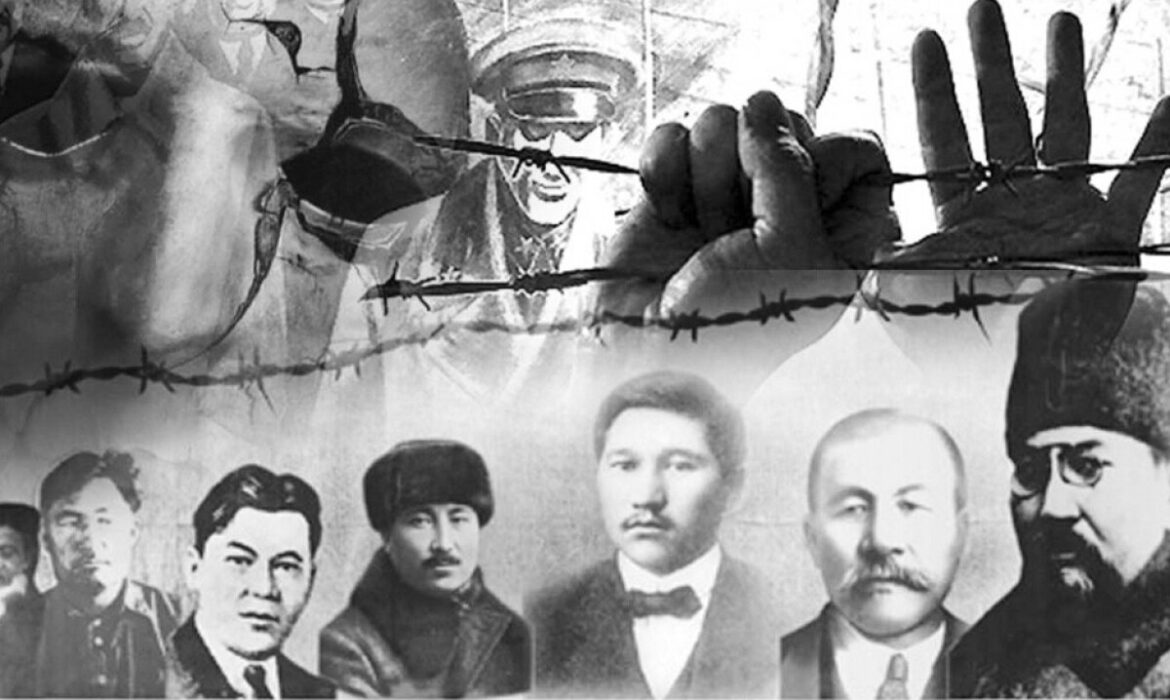
Another great tragedy that struck the Kazakh steppe was political repression. During the years of Soviet rule, thousands of people were arrested, executed, or sent to labor camps under false accusations such as being “enemies of the people,” “nationalists,” or “unreliable elements.” According to official figures, more than 100,000 people in Kazakhstan became victims of political repression, with approximately 25,000 sentenced to death.
During those years, major labor camps such as Karlag, ALZHIR, and Steplag were established on the territory of Kazakhstan. During the repression period, millions of people from different parts of the Soviet Union were deported to Kazakhstan. In those difficult times, Kazakh land became a refuge for many peoples affected by tragedy and displacement.
Among the victims of those dark years were some of Kazakhstan’s most outstanding sons and daughters. Alikhan Bokeikhan, Akhmet Baitursynuly, Mirzhakyp Dulatuly, Mukhamedzhan Tynyshbayev, Turar Ryskulov, Magzhan Zhumabayev, Saken Seifullin, Ilyas Zhansugurov, Beimbet Mailin, and Sanjar Asfendiyarov — statesmen, scholars, and writers — were unjustly persecuted. They devoted themselves to the nation’s freedom, education, and future, yet became victims of the totalitarian regime.
During the years of independence, significant efforts have been made to restore historical justice. In 1993, the Law “On the Rehabilitation of Victims of Mass Political Repression” was adopted. In subsequent years, thousands of citizens were rehabilitated, and archival documents began to be systematically studied. Today, the work of the State Commission for the Full Rehabilitation of Victims of Political Repression continues.
May 31 is not merely a historical date. It is a day to honor the past, remember what was lost, and appreciate the value of independence. The tragedy that shaped the fate of millions must never be forgotten.
National memory is the spiritual foundation of a nation. Therefore, commemorating the victims of famine and political repression is not only a duty to history but also a sacred responsibility to future generations.