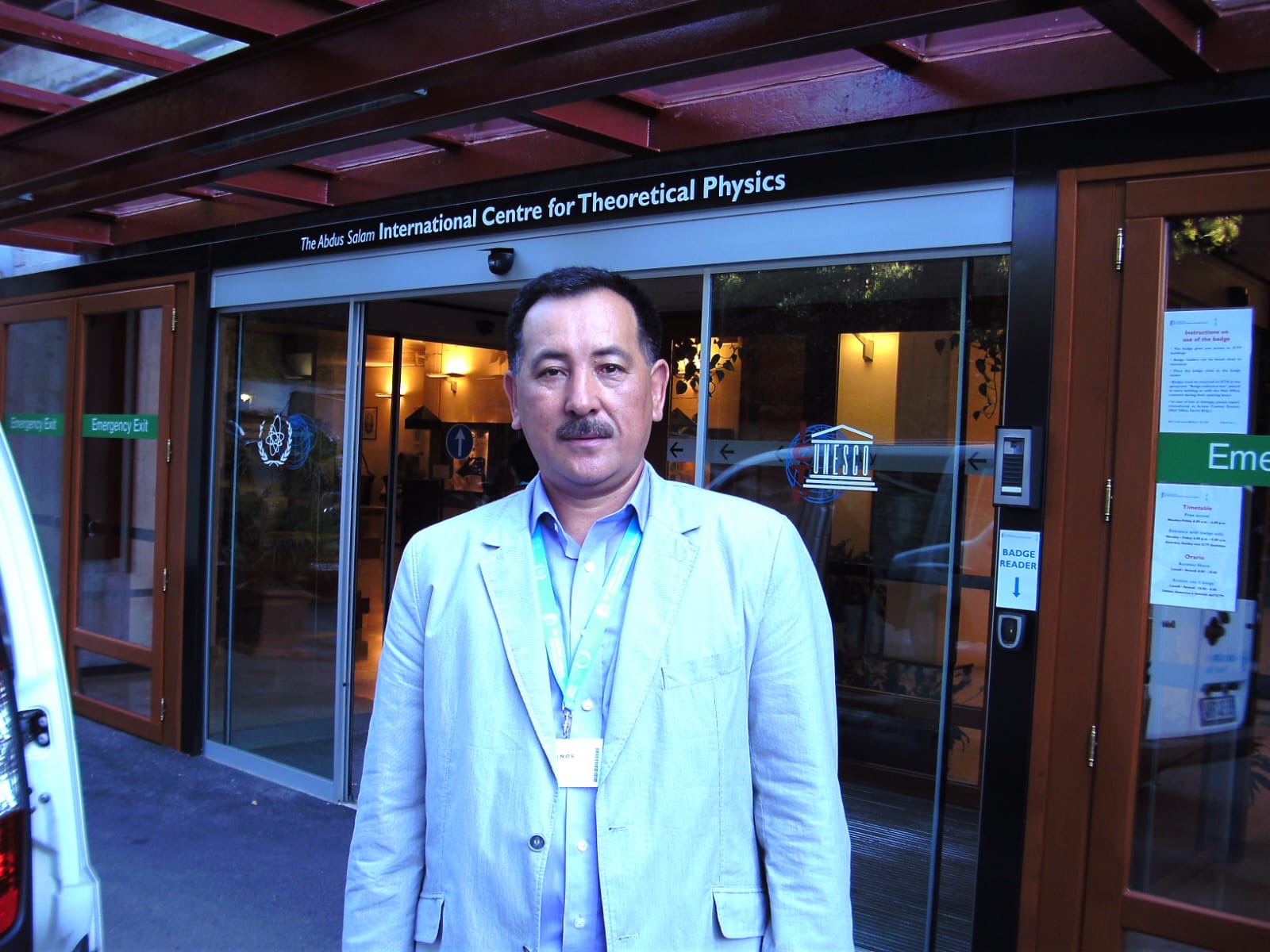
Marking the 65th anniversary of Tlekkabul Sabitovich Ramazanov, Academician of the National Academy of Sciences of the Republic of Kazakhstan under the President of the Republic of Kazakhstan
How can we describe matter in which particles no longer conform to the simplified picture of an ideal gas, and every motion depends on collective fields and quantum effects? For Academician Tlekkabul Ramazanov, this question became the scientific programme of a lifetime. His school brought together theory, computer modelling and experiment to make the complex world of non-ideal and dusty plasma accessible to calculation, observation and new technologies.
Matter That Remembers Its Neighbours
Plasma is often called the fourth state of matter. Yet this definition conveys only the broadest picture: a gas becomes ionised, free electrons and ions appear, and electric fields begin to influence particle motion. In rarefied, hot plasma, interactions between individual particles can be treated as relatively weak in many problems. In non-ideal plasma, that simplicity disappears. Interaction energy becomes comparable to thermal energy; the motion of one particle changes its surroundings, and those surroundings, in turn, alter its trajectory.
This area of physics became the principal focus of Tlekkabul Sabitovich Ramazanov’s research. Non-ideal plasma occurs in the interiors of planets and stars, in dense matter heated by a laser pulse, in inertial-confinement fusion problems, and in laboratory gas discharges. Its properties are essential for calculating pressure and energy transport, electrical conductivity, particle collisions and the rate at which thermal equilibrium is established. An error in describing microscopic interactions ultimately becomes an error in the model of the entire system.
Tlekkabul Sabitovich was born on 28 May 1961 in the village of Ganyushkino, Kurmangazy District, Atyrau Region. In 1983, he graduated with honours in Theoretical Physics from the Faculty of Physics of S. M. Kirov Kazakh State University, then continued his studies as a full-time postgraduate student. He carried out his dissertation research at the Kurchatov Institute of Atomic Energy in Troitsk, Moscow Region. His professional career is closely associated with Al-Farabi Kazakh National University, where he progressed from engineer and junior researcher to professor, head of research divisions and vice-rector.
In 1988, the young researcher defended his Candidate of Sciences dissertation on the numerical modelling of the thermophysical and electrophysical properties of dense plasma. In 1995, at the Joint Institute for High Temperatures of the Russian Academy of Sciences, he defended his doctoral dissertation on the theory and computer modelling of non-ideal plasma using pseudopotential models. He became Kazakhstan’s first Doctor of Physical and Mathematical Sciences in Plasma Physics. In 1996, he was awarded the academic title of professor.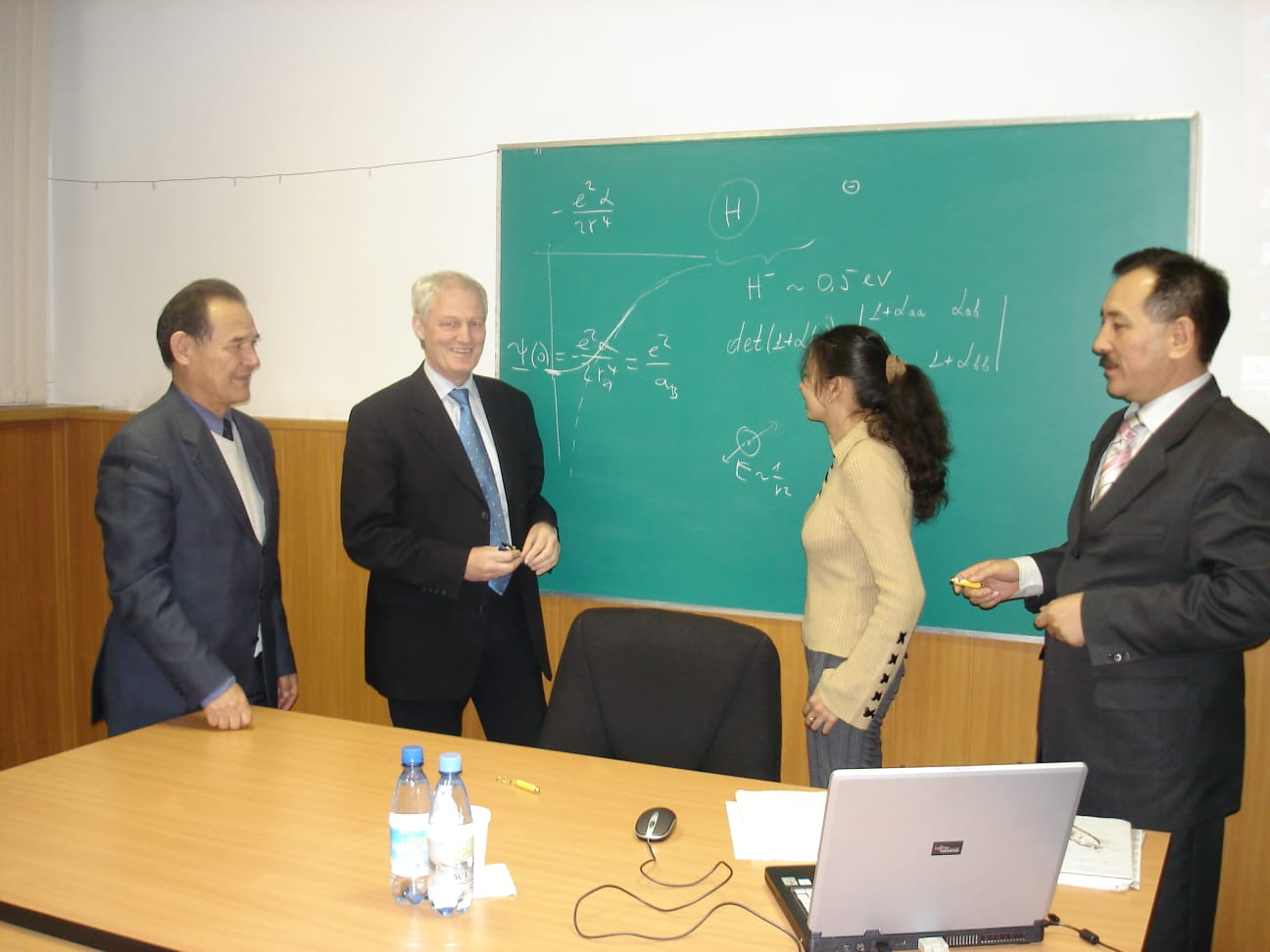
A Formula in Place of Infinity
One of the central challenges in plasma physics concerns the Coulomb interaction. Charged particles act on one another over long distances, while applying the simple point-charge formula in certain calculations produces infinitely large energy values—mathematical divergences. Real plasma modifies this interaction: surrounding charges screen the field, while the wave nature of particles becomes apparent at short distances. In his 1988 Candidate of Sciences dissertation, Ramazanov completed an idea he had begun developing as a student and derived a generalised Poisson–Boltzmann equation describing the simultaneous correlation of N particles in dense plasma on the basis of a pseudopotential.
A pseudopotential, or effective potential, makes it possible to describe such interactions with a single practical formula. It is not an arbitrary substitution or a mathematical trick, but a way of incorporating the influence of the medium, many-particle correlations and the quantum nature of particles into pair interactions. In a 1995 article published in the prestigious journal Physics Letters, Ramazanov and his mentor, Academician Fazylkhan Baimbetov, developed a new pseudopotential model of classical non-ideal plasma that accounted for collective phenomena. The study established a major and promising line of research that was subsequently expanded in a systematic way.
In 2002, Tlekkabul Ramazanov and his students were the first to obtain screened effective potentials for strongly coupled semiclassical plasma that simultaneously accounted for quantum-mechanical diffraction at short distances and the screening of charge fields at long distances. For a non-specialist, the result can be put simply: the researchers created an accurate “portrait of the force” between particles across the full range of distances at which the simple Coulomb formula is no longer sufficient.
The next step concerned partially ionised plasma, in which neutral atoms coexist with electrons and ions. A 2005 study derived a model of the polarisation interaction between a charge and an atom, taking diffraction and screening into account. Such models are needed to calculate the transport and optical properties of dense plasma because electron–atom collisions affect both the system’s conductivity and its composition.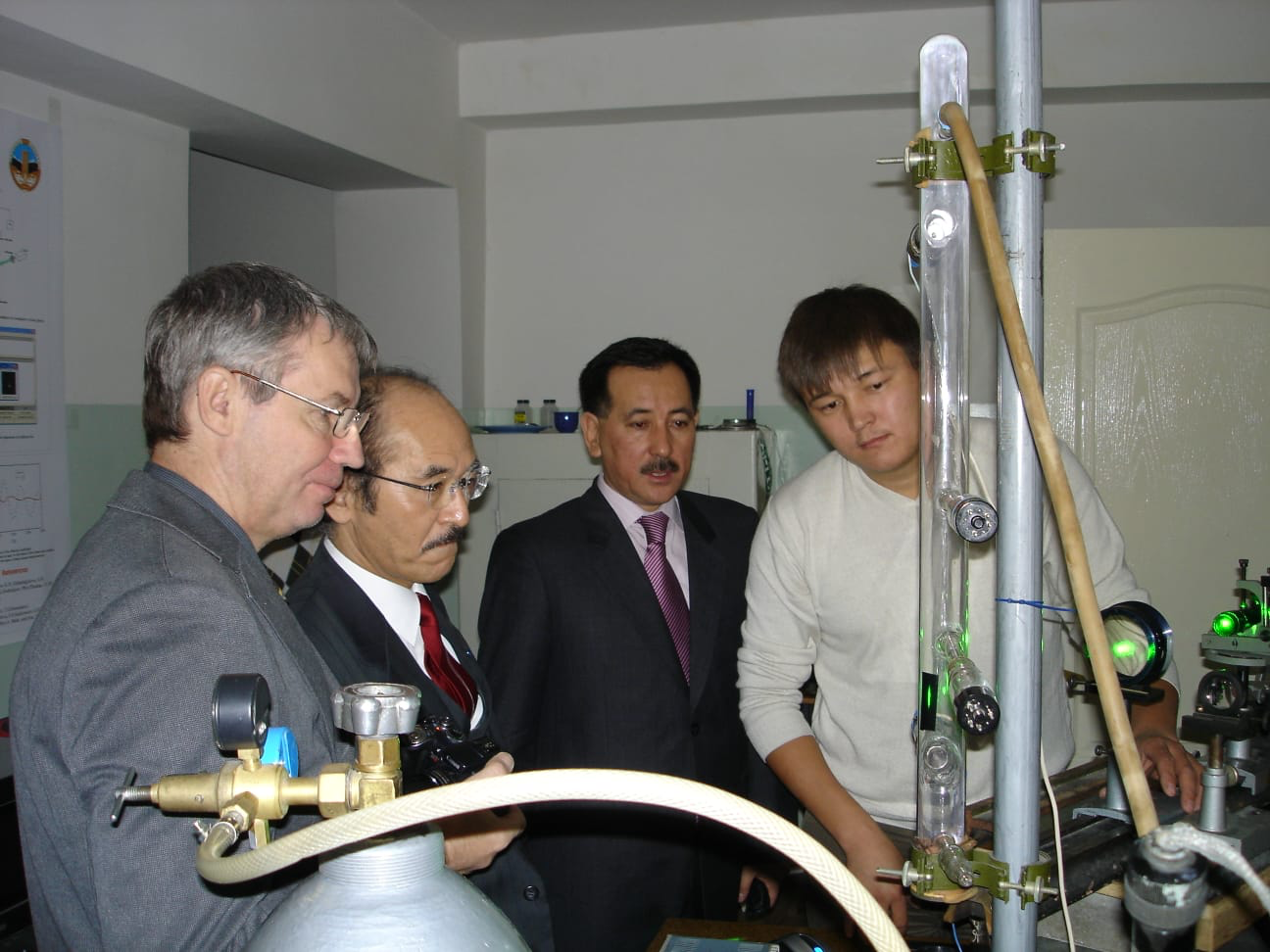
In 2016, Tlekkabul Ramazanov and his students applied the multipole expansion method to complex particles in classical and quantum plasmas. They obtained potentials for dipole–dipole, charge–dipole, charge–atom and atom–atom pairs. The method showed that once it is known how a medium modifies the field of an individual charge, the interactions between composite objects can be derived consistently. In this way, a single mathematical idea connects problems in dusty plasma, warm dense matter and condensed-matter physics.
A Computer Experiment for Dense Plasma
A formula gains real power when it can be used to calculate a measurable property of matter. In a 2006 study, Tlekkabul Ramazanov and his German colleagues used molecular dynamics to investigate the microscopic characteristics and electrical conductivity of dense, semiclassical hydrogen plasma. In a computational experiment, particles move under specified forces, allowing the researcher to observe how collective behaviour emerges from a multitude of trajectories.
This approach is especially important in the intermediate parameter range, where simple approximations are no longer reliable and a full quantum calculation is extraordinarily difficult. Computer modelling becomes the link between analytical theory and physical experiment. It makes it possible to test interaction potentials, obtain correlation functions and estimate charge transport under conditions characteristic of astrophysical objects and controlled-fusion research.
An international study published in 2010 with colleagues from the universities of Rostock and California, Los Angeles, examined the equation of state of partially ionised hydrogen plasma. The authors linked the electron–atom interaction contribution to experimental scattering data and calculated pressure, chemical potential and composition as functions of temperature and density. The results became a benchmark for testing more approximate models.
The research group later extended this approach to dense noble-gas plasmas. Publications from 2022 developed effective optical potentials for interactions between electrons and atoms of helium and other noble gases. Treating screening, diffraction, polarisation and exchange contributions together substantially changed the scattering characteristics compared with calculations in which each effect was considered separately. This is an important methodological conclusion: in a dense medium, physical mechanisms cannot simply be added as independent corrections without verification.
In a 2024 study, Tlekkabul Ramazanov and his colleagues examined temperature relaxation in dense, hot beryllium plasma. Their calculations showed that the finite size and internal structure of the ionic core affect the transport cross-section of electron–ion collisions, collision frequency and the rate of temperature equilibration. This is fundamental to modelling laser-induced plasma and inertial-confinement fusion. The energy-exchange time between electrons and ions determines the evolution of the entire system.
Plasma in Which Particles Build a Crystal
In the early 2000s, a new field—dusty, or complex, plasma physics—began to develop in Kazakhstan under the leadership of Academician Tlekkabul Ramazanov. Microparticles of solid matter are introduced into an ordinary gas discharge. They collect electrons on their surfaces, acquire a large negative charge and begin to interact strongly. Under certain conditions, the particles arrange themselves into an ordered structure resembling a crystal lattice. Such an object is known as a plasma crystal.
For physicists, the advantage of this system lies in its visibility. The atoms of an ordinary crystal cannot be tracked with the naked eye in real time, whereas microparticles in plasma can be observed with a camera. Researchers can see order emerge, waves propagate, defects appear and phase transitions occur. Complex plasma thus becomes a model laboratory for the statistical physics of many-particle systems.
In 2005, a plasma crystal was produced in Kazakhstan for the first time using an original experimental facility at KazNU. The significance of this achievement went beyond a single experiment. A research programme grew around the facility, bringing the theory of effective potentials together with gas-discharge diagnostics and the direct observation of microparticles. 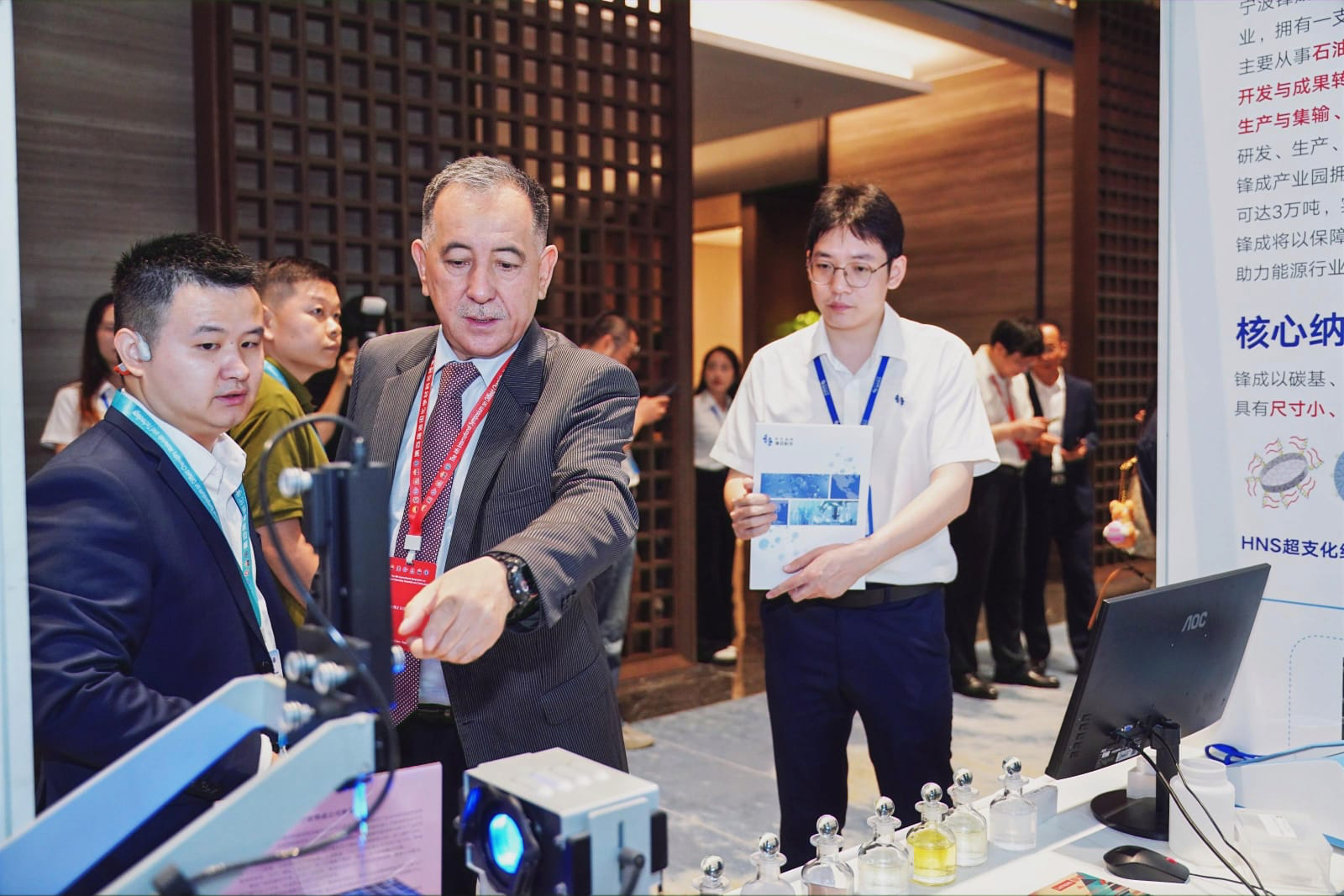
A 2008 study demonstrated how cautiously even the visible pattern of a discharge must be interpreted. In a stratified glow discharge, the luminous layers did not coincide spatially with the maxima of the electric field. A numerical model and experiment explained the apparent paradox of dust particles levitating on the “unexpected” side of a striation. Owing to non-local processes in the electron component, the optical glow was spatially displaced relative to the field.
In 2014, the group proposed an alternative method of plasma diagnostics based on the width of the dust-free region around an electric probe. From the measured size of this region, the model could determine electron temperature and concentration. The results agreed with classical Langmuir-probe diagnostics. The method is useful in regimes where obtaining a reliable current–voltage characteristic with a standard probe is difficult.
A 2015 study combined a laboratory experiment with calculations of void formation—the development of an empty region at the centre of a dust cloud. It showed that the radial component of the ion-drag force creates this region. The higher the discharge current, the wider the void. The calculations also predicted more pronounced voids for larger particles and at lower gas pressure. The study offered a testable prediction for subsequent experiments with complex plasma in microgravity.
From the Terrestrial Laboratory to Space
Gravity hinders the formation of large three-dimensional structures made of microparticles. On Earth, they must be confined by electric or magnetic fields. In microgravity, this factor almost disappears, opening up regimes inaccessible to terrestrial experiments. Research into complex Coulomb systems therefore moved naturally into orbit.
In 2016, an international team that included Tlekkabul Ramazanov published the results of a series of experiments conducted aboard the International Space Station using the upgraded Coulomb Crystals apparatus. In a magnetic trap, the researchers observed the formation of a cluster of charged and uncharged diamagnetic particles, the excitation and damping of its oscillations, and the destruction of the structure in a strong electric field. Particle charge was estimated from the speed at which the particles dispersed from the cluster.
The study’s authors included Kazakh cosmonauts Talgat Musabayev and Aidyn Aimbetov. The concepts involved must be distinguished precisely. Terrestrial plasma crystals form from charged dust in a plasma medium, whereas the orbital experiment studied Coulomb clusters of diamagnetic particles in a magnetic trap without conventional plasma screening. What unites the two lines of research is the physics of strongly interacting particles and self-organisation.
The orbital experiment reveals a defining feature of Academician Ramazanov’s school. Theory does not remain confined to a formula. Effective interactions are tested in computer models, then in laboratory facilities and, when the problem demands it, under microgravity. This cycle turns a fundamental subject into a sustained research programme.
Quantum Hydrodynamics with Defined Limits
Another line of research concerns quantum hydrodynamics. It describes the collective motion of electrons in terms analogous to fluid flow, supplementing conventional equations with quantum corrections. The method is attractive because a complex many-particle problem can be represented through density, velocity and effective potentials. Yet that convenience creates a risk that the model may be applied beyond the range in which it is accurate.
A 2018 theoretical review systematically derived the equations of quantum hydrodynamics for finite-temperature plasma, refined established results, proposed a non-local form of the Bohm potential and discussed the limits of applicability of the approach in detail. The importance of the article lies both in the formulae obtained and in its scientific discipline. The authors clearly showed which approximations underpin the compact model and under what conditions it can be trusted.
This approach is characteristic of the academician’s entire research programme. An effective model is valuable not because it simplifies a problem at any cost, but because it preserves the decisive physical mechanisms and has verifiable limits. That is what distinguishes a working scientific instrument from an elegant but uncontrolled formula.
What This Research Has Given Kazakhstan
The research of Tlekkabul Ramazanov and his scientific school has produced several important results for Kazakhstan. Above all, an independent national field of non-ideal and dusty plasma physics has taken shape. Original theoretical models, computer methods and experimental facilities have been developed. This has enabled Kazakh researchers not only to study work carried out abroad, but also to propose their own solutions, publish results in leading international journals and participate in major collaborative projects.
The creation of an experimental base for studying dusty plasma in Kazakhstan is particularly significant. In 2005, the country’s first plasma crystal was produced at KazNU. The facilities developed there made it possible to observe the motion of charged microparticles, investigate the formation of ordered structures and test theoretical calculations in the laboratory. This work strengthened Kazakhstan’s position in modern plasma physics and created opportunities to train young researchers. 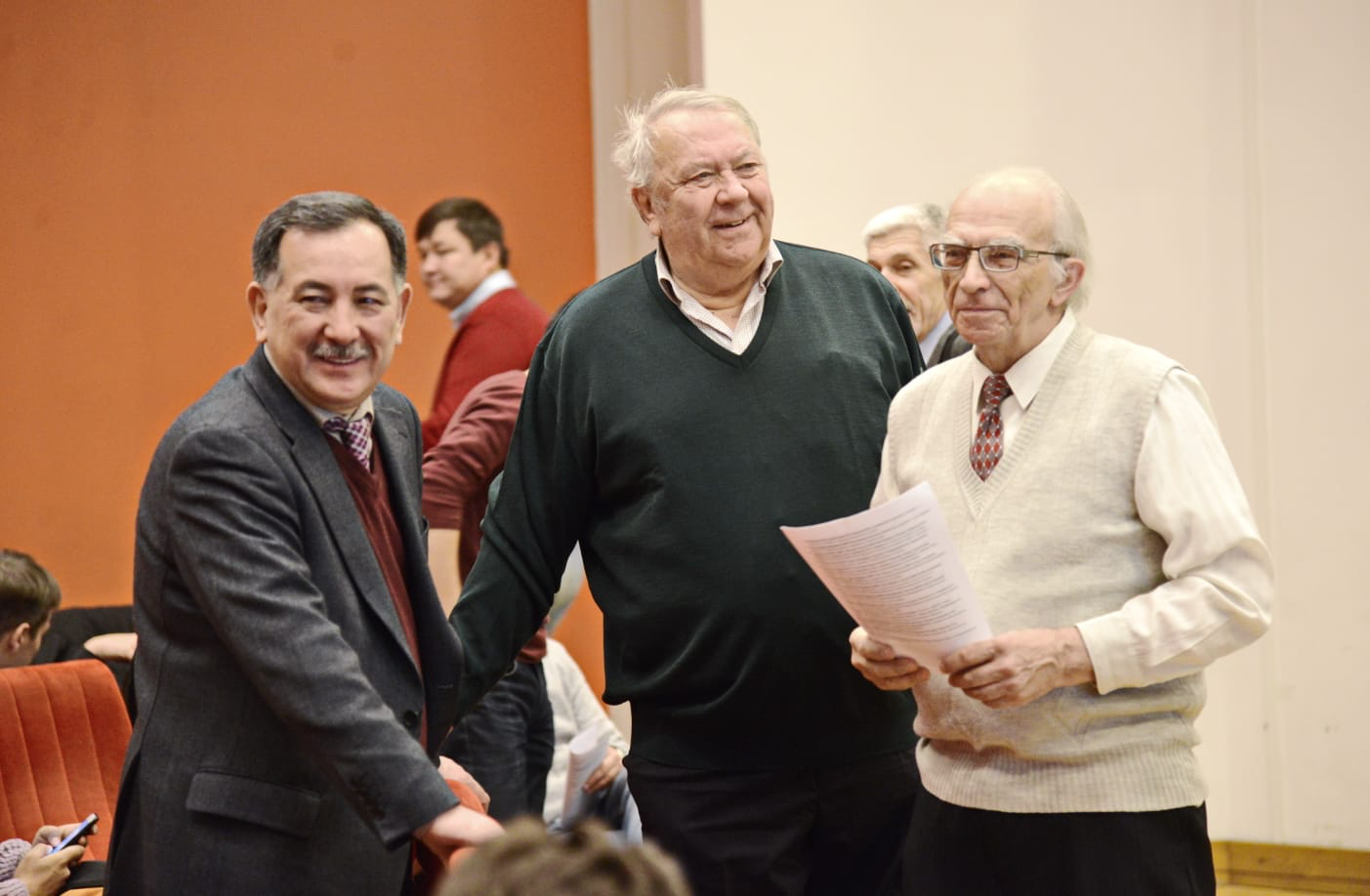
The school’s results are also important for the development of plasma technologies. Research into charged-particle interactions, gas discharges and plasma containing microparticles provides a scientific foundation for technologies used to produce and process new materials, apply coatings, synthesise nanoparticles and nanoclusters, and diagnose plasma processes. This is, above all, a fundamental basis for future technologies. Moving from a scientific model to industrial application requires further testing and engineering development.
The participation of Kazakh scientists in space research is another distinct achievement. International experiments aboard the International Space Station made it possible to study the behaviour of charged particles under microgravity. Kazakh cosmonauts Talgat Musabayev and Aidyn Aimbetov took part in the work. Kazakhstan was therefore represented in the space experiment not only as a country that sent its cosmonauts into orbit, but also as a participant in the scientific programme.
The contribution to human capital is equally important. Under the academician’s supervision, Doctors and Candidates of Sciences, PhD graduates, and specialists in theoretical physics, computer modelling and experimental plasma physics have been trained. The school he established continues its research in Kazakhstan and collaborates with leading centres abroad. His contribution is therefore measured not only by published papers, but also by the emergence of a scientific field, a laboratory base and a new generation of researchers.
This account remains factually measured. It does not claim that the developments have already been adopted throughout industry; rather, it presents their demonstrated importance for science, the technological knowledge base, researcher training and space research.
A School That Carries the Idea Forward
A scientific school emerges when a shared language of inquiry outlives any single publication. Across three decades of Academician Ramazanov’s work, it is not one subject that recurs, but a method: define a physically grounded interaction, test it through calculation, compare it with experiment and extend the model to a new class of systems. This is why his name is associated with such varied objects as dense hydrogen, beryllium plasma, noble gases, dust clouds, and plasma and Coulomb crystals. They are united by the physics of correlated particles.
From 1992 to 2011, Ramazanov headed laboratories for the mathematical modelling of plasma processes, dusty plasma and plasma technologies at KazNU’s Research Institute of Experimental and Theoretical Physics. Since 2011, he has headed the institute’s Plasma Physics Department. Under his supervision, one doctoral, twenty Candidate of Sciences and sixteen PhD dissertations have been defended. These figures convey the scale of his mentorship, but the substance of the school is most clearly visible in its publications: former students become co-authors, leaders of new research areas and links to international laboratories.
The school’s scientific collaboration encompasses centres in Germany, France, Russia, Japan, the United States, South Korea and other countries. Joint publications with the universities of Rostock, Kiel and California, Russian institutes and participants in space experiments have brought Kazakh results into international plasma physics. At the same time, the research base remains in Almaty. Facilities, models and the training of young specialists continue to develop at KazNU and its affiliated institutes.
Tlekkabul Ramazanov has published more than 820 scientific works and delivered over 240 papers at international conferences. Yet a scientific school is not defined by the sum of its publications. Its principal achievement is the ability to formulate new problems and reproduce a culture of evidence in which theoretical conclusions are tested through calculation and experiment
A Scientist and Organiser of Science
Ramazanov’s scientific biography also includes major organisational work. From 1998 to 2000, he served as dean of the Faculty of Physics at KazNU, and from 2000 to 2006 he headed the Research Institute of Experimental and Theoretical Physics. In 2006–2007, he chaired the Science Committee of the Ministry of Education and Science of the Republic of Kazakhstan. In 2007–2008, he served as KazNU’s Vice-Rector for High Technologies and Implementation, and from December 2010 to December 2021 as Vice-Rector for Research and Innovation.
For a scientist, such work means moving from one’s own laboratory to the architecture of an entire research environment. Fundamental projects, researcher training, infrastructure, international ties, expert assessment and implementation must all be connected. The experience of a researcher accustomed to seeing a system of interacting particles also proved valuable in science administration: an individual result gains significance when it is supported by a school, equipment, a journal, expertise and a route to the next project.
Tlekkabul Ramazanov served as an expert for the INTAS international scientific foundation and the European Union framework programmes in plasma physics, and reviewed articles for leading specialist journals. He is editor-in-chief of the English-language journal Physical Sciences and Technology and participates in scientific councils and international conferences. In 2017, he was elected an Academician of the National Academy of Sciences of the Republic of Kazakhstan.
His work was recognised with the State Prize of the Republic of Kazakhstan in Science and Technology in 2015 and the Parasat Order in 2017. He received the state grant for Best University Teacher three times—in 2006, 2011 and 2021—and was awarded a state scientific scholarship five times. These honours reflect a rare combination of research, teaching and organisational achievement.
The Physics of Strong Connections
Tlekkabul Ramazanov reaches his sixty-fifth year as the scientist who established an independent Kazakh school of non-ideal plasma physics and plasma nanotechnology. Its journey began with a question: how should particle interactions in dense plasma be described correctly? From that question grew pseudopotential models, molecular-dynamics calculations, studies of conductivity and equations of state, experimental diagnostics of dusty plasma, plasma crystals, new nanomaterials and research under microgravity.
The scientific value of this programme lies in its continuity. The 1995 model did not remain a historical formula. Its logic continued in screened potentials, calculations of electron–atom collisions, quantum hydrodynamics and the contemporary problem of temperature relaxation in dense plasma. The experimental strand likewise developed from laboratory discharges to diagnostics of complex dusty structures and space research.
One metaphor captures this scientific path with particular precision. Non-ideal plasma becomes interesting when its particles can no longer be considered in isolation. Each carries the imprint of its collective environment. A scientific school works in much the same way. Its achievements belong not to a single author, but to a system of connections—between teacher and students, theory and experiment, Kazakhstan and research centres around the world. Tlekkabul Ramazanov has built precisely such a system: strongly coupled, resilient and capable of generating new ideas.
Professor
Gulmira Sultanbayeva