Why does one road withstand dozens of winters, while another cracks and ruts after just a few seasons? For Academician Bagdat Teltayev, this question became a life’s work. His research combines mechanics, physical chemistry, field observations, and engineering calculations so that roads in Kazakhstan are designed according to the laws of materials and climate rather than generalized templates.
The Road as a Scientific Challenge
Kazakhstan possesses one of the most challenging natural laboratories for road construction. In the north, the pavement freezes to great depth; in the south, summer asphalt heats up to temperatures that soften the binder; and in the spring, moisture penetrates the subgrade. Coupled with growing freight traffic, ordinary roads simultaneously experience cold, heat, moisture, and millions of repetitive loads. A calculation error turns into a crack, a rut, emergency repairs, and new budget expenditures.
Bagdat Teltayev’s scientific career grew out of an aspiration to understand this chain to its core. He investigates not only visible surface degradation, but what happens beforehand: how bitumen alters its internal structure, how asphalt concrete slowly deforms under load, how temperature and moisture permeate pavement layers, and how damage accumulates in the material. This perspective shifts the focus from repairing consequences to forecasting service life.
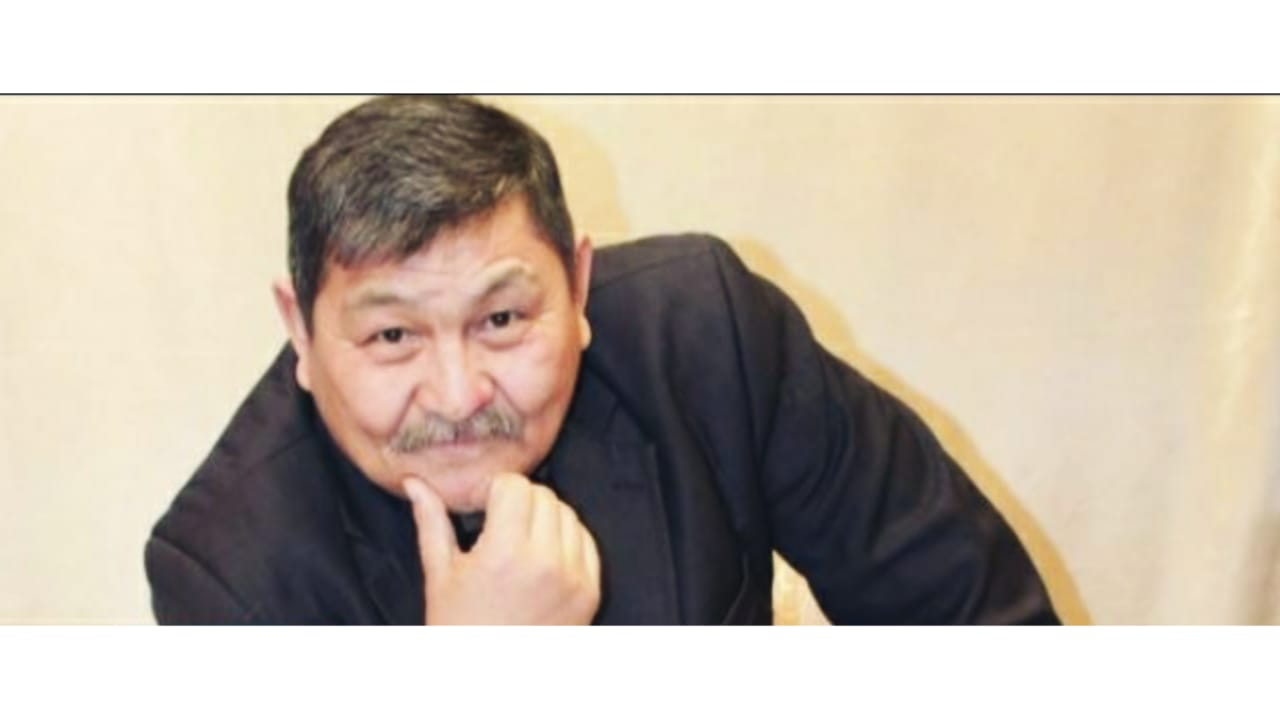
Bagdat Burkhanbayuly was born on March 23, 1966, in the aul of Zhaugash Batyr, Merke District, Zhambyl Region. In 1983, he graduated with honors from Amangeldy Imanov School, served in a motor vehicle company of the Group of Soviet Forces in Germany, and then entered the Road Faculty of the Almaty Automobile and Road Institute. In 1991, he graduated with honors majoring in "Automotive Roads," initiating a path from intern-lecturer and assistant to professor and head of a major scientific direction.
Following postgraduate and doctoral studies at the Institute of Mechanics and Machine Science of the National Academy of Sciences, the scientist focused on the time-dependent behavior of materials. Asphalt concrete only appears motionless. Under sustained loads, it creeps - meaning it slowly and irreversibly changes shape. Repeated passages of heavy vehicles accumulate damage. In frost, the material becomes brittle; under heat, it loses stiffness. To calculate a reliable structure, an engineer needs not just a single "passport" strength rating, but the entire history of future material performance.
In 2024–2025 research, Bagdat Teltayev’s research group conducted series of tensile tests on asphalt concrete across various temperatures and stresses. Mathematical models of transient and accelerated creep were derived. For a non-specialist, the meaning is straightforward: scientists learned to describe the moment when a material still resists load versus the transition to a stage where deformation rapidly leads to failure. The model links load, temperature, strain rate, and time-to-failure. This forms the basis for more accurate selection of layer thickness and mix design tailored to real traffic rather than a conventional average vehicle.
The same logic applies to long-term strength models of rheonomic materials whose properties depend on time. Calculations were verified on optical fiber, aluminum alloy, and pearlitic steel across a wide range of temperatures and loads. Practical value extends beyond the road industry: short-term test data can forecast the service life of structural materials if their operational regime and loading history are known. For infrastructure, this means foreseeing reliability limits, planning inspections, and scheduling replacements before failures occur.
Climate Measured Inside the Road
One of the principles of Bagdat Teltayev’s scientific school is that climate cannot be accounted for by air temperature alone. A distinct thermal regime develops inside the pavement structure. To study this, temperature and humidity sensor systems were installed along highways to monitor pavement layers and soil subgrades year-round. Thus, the road becomes a measuring instrument, and design relies on data gathered directly in Kazakhstan.
On a section of the Almaty – Bishkek highway, researchers recorded 83 freeze-thaw cycles in the upper asphalt concrete layer. Over 80% of the cycles lasted no more than 20 hours, and minimum temperatures rarely dropped below -6°C. On an Almaty city road, surface cycles reached 76, dropping to six at a 28 cm depth. Scientists also identified a boundary at ~21.5 cm: above it, diurnal fluctuations dictate the thermal regime; below it, seasonal and annual changes dominate.
These figures matter practically. In the lab, samples must freeze and thaw as they do in real structures. If the testing regime is wrong, a material may pass the test yet fail a real winter. The derived dependencies allow setting justified cycle counts, durations, and minimum temperatures for specific climate zones, turning national data into material requirements that extend pavement life.
The research group's latest work adds forecasting to monitoring. Based on 7,067 hourly temperature measurements across eight depths (3 to 300 cm), researchers compared six machine learning algorithms with a simple baseline forecast using previous states. The result was methodologically precise: over a 24-hour horizon, complex models did not outperform the baseline. Their advantage emerged only at longer horizons and greater depths where thermal inertia smooths rapid shifts. This guards against AI hype for AI's sake and shows where it genuinely aids road management.
Rutting is often viewed as a surface defect curable by a new asphalt overlay. Field studies by Bagdat Teltayev’s team show the root cause often lies deeper in the mismatch between the entire structure and real traffic volume. On a public transit lane, maximum cumulative rut depth reached 92 mm, with three-quarters of measurements exceeding allowable limits under ~1,100 buses/trolleybuses daily. Calculations proved a 50 cm total pavement structure was far too weak for such loads.
In another study, maximum rut depth reached 110 mm with 715 buses and 25 trucks daily, whose rut-forming impact exceeded design vehicle action multiple times. The takeaway is clear: re-laying surface courses without reassessing subgrade bearing capacity treats symptoms. Science enables structural design for actual traffic composition, stopping premature repair cycles.
In Northern Kazakhstan, a mobile diagnostic lab surveyed 43 km and 47 km sections of the Yekaterinburg – Almaty road, measuring smoothness, rut depth, longitudinal/transverse crack lengths, alligator cracking area, and structural elasticity. Research revealed the critical role of spring oversaturation in the upper subgrade: during thawing, subgrades lose stability and accumulate plastic deformations. For road services, this justifies seasonal diagnostics, drainage control, and load restrictions during vulnerable windows.
Pavement longevity largely depends on bitumen the binder holding the mineral skeleton together. Exposed to oxygen, UV radiation, and temperature, it ages, embrittles, and loses crack-free stretchability. Research involving Bagdat Teltayev examines this at internal structural levels while seeking accessible slowing methods.
A 2026 international study examined graphene and graphite impacts on bitumen aging. Both modifiers enhanced thermal stability and rheological properties, with graphene showing a superior protective effect. Microscopic methods confirmed stable additive dispersion and suppressed growth of asphaltene structures causing aged bitumen hardening. Engineering-wise, this promises pavements losing elasticity slower under sun exposure and resisting cracking longer.
Another direction involves the circular economy. Vacuum distillation residues exhibited antioxidant and rejuvenating effects, applicable pre-aging for protection or post-aging for rejuvenation. Municipal waste and scrap tire pyrolysis products also showed utility: carbonaceous residue strengthens bitumen structure, while pyrolysis oil restores mobility. Combining polymers and vacuum residues widened working temperature ranges and reduced property-temperature dependency.
Particularly illustrative is two-stage oxidation of vacuum residue with crumb rubber. The resulting modified bitumen resisted rutting at 46–64°C and retained superior crack resistance down to -40°C, substituting expensive bitumen with recycled tires. For Kazakhstan, this integrates three effects: wider working temperature ranges, waste recycling, and reduced primary feedstock demand.
Another development uses non-food rapeseed oil for adhesion additives, helping bitumen bond strongly to stone and resist water stripping. Surface contact angles rose from 19.81° to 80.33°, indicating notable water-resistance improvements without requiring organic solvents—yielding more technological mix production and lower water-damage risks.
From Scientific Formula to Industry Standard
Scientific results gain societal impact upon entering design practice. Under Bagdat Teltayev’s leadership, 11 interstate standards and 60+ departmental normative documents were developed. The domestic KazPave pavement design system was created, accounting for Kazakhstan’s climatic zones, marking a crucial step toward technological sovereignty where design solutions rely on domestic material properties, local temperatures, humidity, and traffic load structures.
From 2006 to 2022, Bagdat Teltayev headed the Kazakhstan Road Research Institute, supporting the Astana – Borovoye motorway, the Western Europe – Western China corridor Kazakh section, and CASPI BITUM. Regionally, 70+ innovative materials were introduced and ~200 pilot test sections built - critical for vetting lab ideas via transport, weather, and time before network scaling.
The scientific agenda gradually expanded beyond highways: railway traffic models, structural thermomechanics, long-term material strength, and slope stability emerged. For the Kurozek– Ekpindi – Zharsu railway section, combined fixed/moving block sections with digital radio data transmission and distributed acoustic fiber-optic sensing were proposed, raising line capacity without track multiplication.
The Kok-Tobe slope study demonstrated mechanics enhancing urban safety. A modified calculation method accelerated and refined slip-surface searches, revealing low safety factors under surface-layer wetting. Value lies in early risk detection and reinforcement choices before natural slopes trigger emergencies.
Behind scientific models and industry solutions stands a school. Bagdat Teltayev formed alongside Academicians Zh.S. Yerzhanov and Sh.M. Aytaliev, Professors B.S. Murtazin, A.I. Iskakbaev, B.S. Radovskiy, and A.K. Kussainov, passing precision experiment cultures, mechanical calculations, and engineering accountability to the next generation. Under his guidance, 5 Doctors of Sciences, 27 Candidates of Sciences, and 7 PhDs were trained.
School vitality shows via research continuity. Recent publications feature colleagues and disciples: Alibay Iskakbaev, Yerbol Aytbayev, Azamat Zhaysanbayev, Aizhan Muta, Arystan Masanov, and others studying asphalt creep, thermal regimes, rutting, road conditions, and new materials. Field monitoring transitions to models, models to test methods, and methods to codes and designs.
International dimensions appear via joint studies with Italian and other researchers, published in Springer, Elsevier, and specialized journals. Scopus profiles list 143 documents, 1,941 citations, and an h-index of 24. Beyond bibliometrics, Kazakh climate data, materials, and engineering challenges enter global scientific discourse while foreign methods undergo national validation.
An Institute for Transport Science
In 2023, on Bagdat Teltayev’s initiative, a transport science section was opened at the National Academy of Sciences of the Republic of Kazakhstan under the President of the Republic of Kazakhstan. The next step was founding the Institute of Transport Sciences and Technologies jointly with ALT University, headed by Teltayev in January 2026. Its scope unifies road, rail, and other transport modes, mechanics, materials science, and digital tech around reliability and capacity challenges.
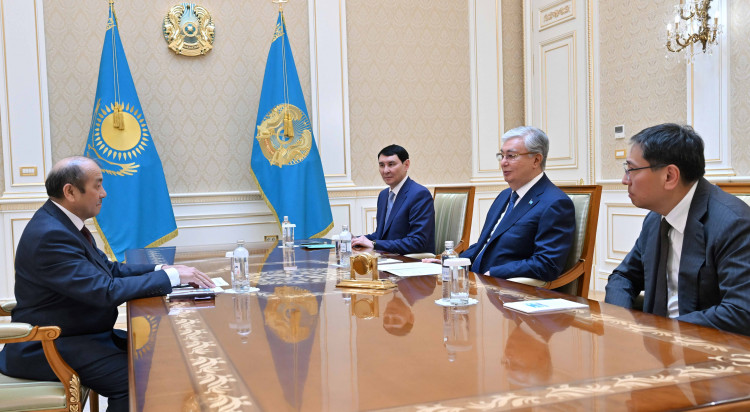
This matches Kazakhstan’s position between major Eurasian markets, realizing transit potential via infrastructure enduring climate, rising loads, and heavy traffic through long-term national observations, calculation models, test beds, and standards developers. In 2024, the scientist discussed road sector issues with President Kassym-Jomart Tokayev, reflecting rare scientific responsibility where research translates directly into state directives, standards, and projects.
At 60, Bagdat Teltayev unites fundamental mechanics, field experiments, and industry management. His discoveries describe low-temperature asphalt self-organization, staged viscoelastic fatigue failure, and nanostructured bitumen formation. Real-world continuations include depth sensors measuring road life, damage-accumulating predictive models, anti-aging additives, and diagnostics exposing traffic-structure mismatches.
For Kazakhstan, this program yields more accurate regional road designs, justifying material selection, early weak-structure identification, recycled waste integration, and data-driven maintenance. Every extra service year means lower unplanned expenses, safer transit, and sturdier regional ties - embodying Academician Bagdat Teltayev's path: studying roads not as static objects, but as living systems governed by time, climate, and load.
Professor Gulmira Sultanbaeva