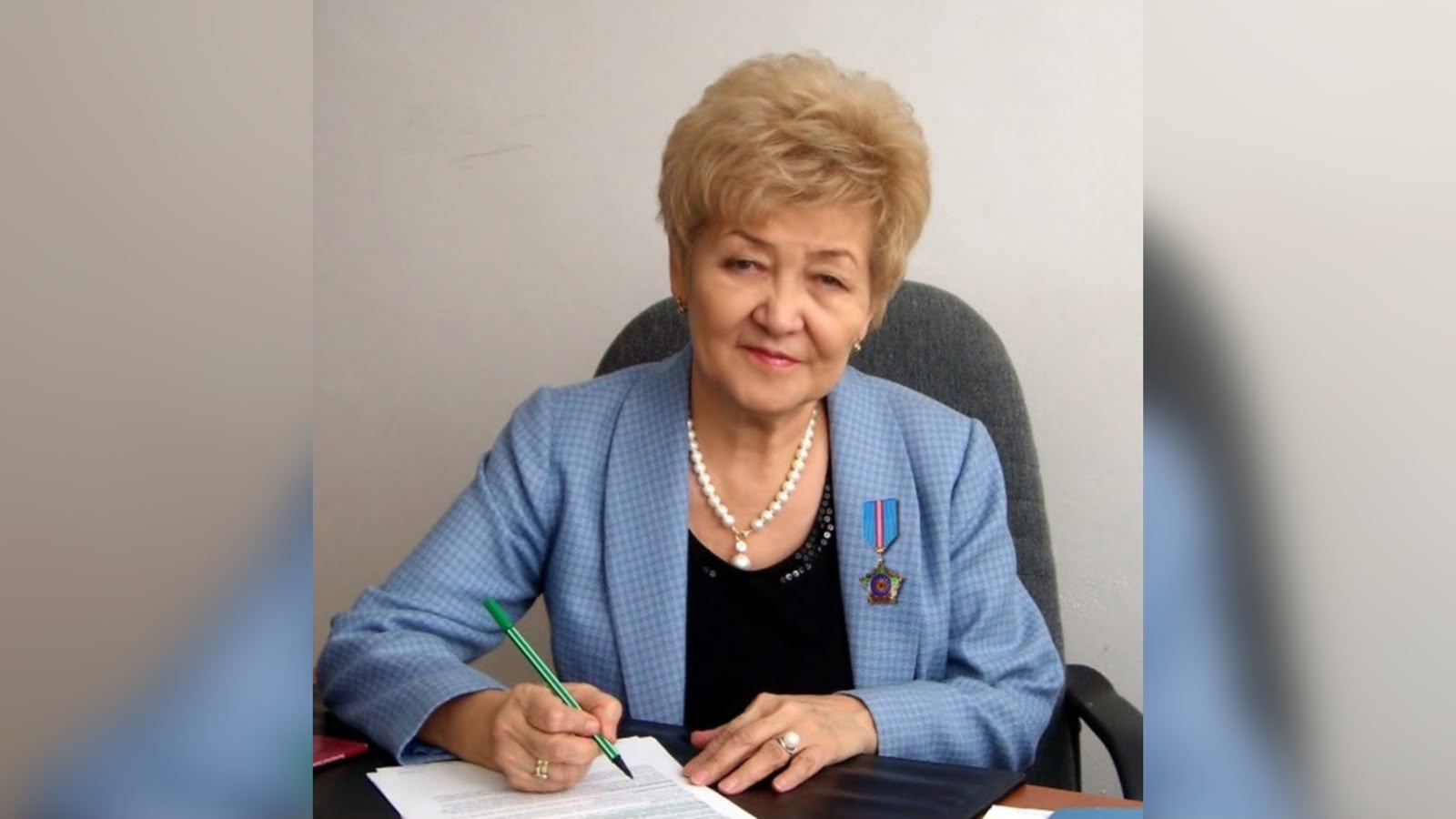
This year, the National Academy of Sciences of the Republic of Kazakhstan celebrates the 80th anniversary of its founding. To mark this significant date, we are launching a series of articles devoted to the work of academicians and the present-day vitality of the scientific schools they established. The subject of the first article in the series is Azhar Akhmetovna Zhubanova, Academician of the Kazakhstan National Academy of Natural Sciences, Doctor of Biological Sciences, and Professor at the Department of Biotechnology of Al-Farabi Kazakh National University.
In the history of science, there are names that cannot be confined within the boundaries of a single specialty they become the source of an entire school, an entire field. Such is the fate of Azhar Akhmetovna. Her name is inextricably linked with the establishment of microbiology and biotechnology in Kazakhstan, and the scientific school she founded continues to make new discoveries to this day.
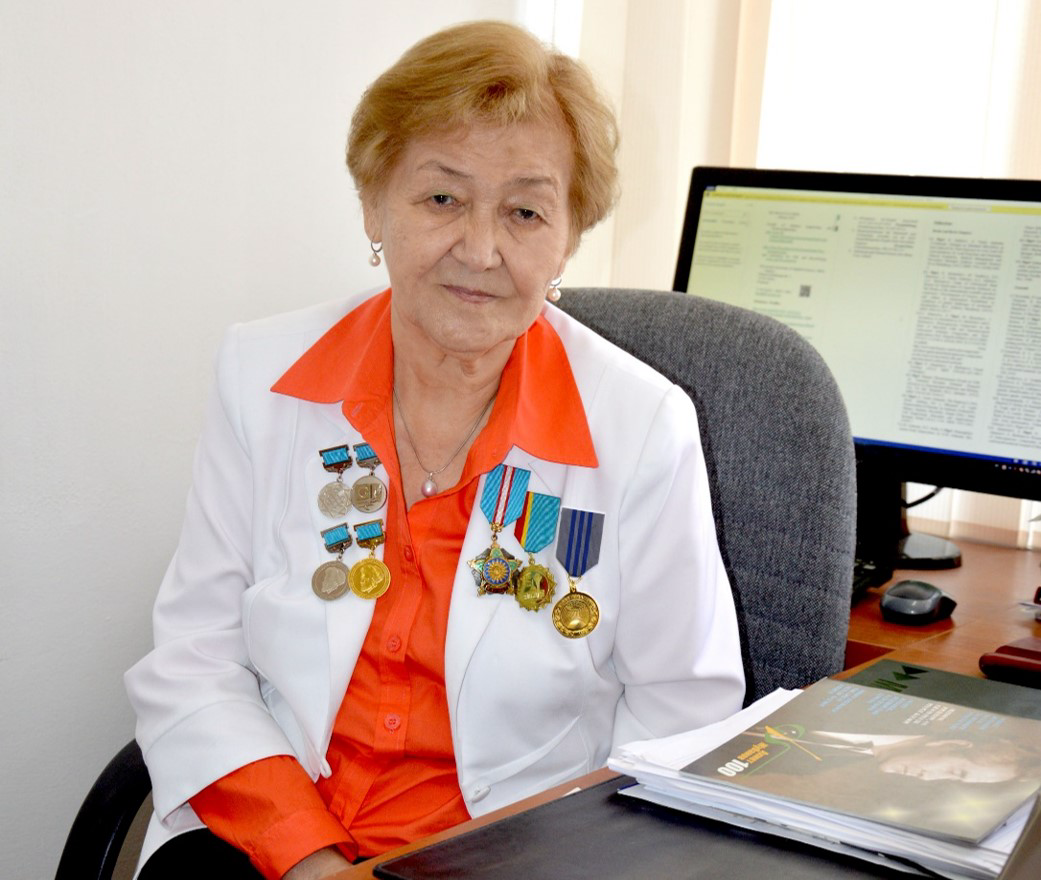
Azhar Akhmetovna Zhubanova was born on April 5, 1941, in Alma-Ata, into the family of Akhmet Zhubanov, the first professional Kazakh composer and an outstanding musicologist and academician. The family endured difficult trials: in 1937, Akhmet Kuanovich’s brother, the renowned linguist Kudaibergen Zhubanov, fell victim to political repression. Growing up in a family that had lived through those difficult years, Azhar Akhmetovna absorbed her father’s tradition of a ‘worthy life,’ in which education and work were regarded as the highest values. No one in the family was forced to pursue music, although her elder sister, Gaziza Akhmetovna, became an academician in the arts. Azhar Akhmetovna herself chose biology: ‘My elder brothers studied at the Faculty of Chemistry. I wanted to be like them, but I chose biology it was considered more suitable for girls,’ she recalls of her choice. Her subsequent life proved that this choice was far from accidental.
After graduating from Secondary School No. 10 in Alma-Ata in 1958, the future scientist enrolled in the Faculty of Biology and Soil Science at Lomonosov Moscow State University, where she specialized in Plant Physiology. After graduating from the university in 1964, she began working as a senior laboratory assistant at the Department of Plant Physiology and Biochemistry of Kirov Kazakh State University. From 1966 to 1975, Azhar Akhmetovna worked as a junior research fellow at the Laboratory of Tumor Biochemistry of the Research Institute of Oncology and Radiology. It was during this period, in 1974, that she defended her Candidate of Sciences dissertation entitled ‘Certain Aspects of Lipid Metabolism in Dyshormonal Tumors’ at the Institute of Experimental and Clinical Oncology of the USSR Academy of Medical Sciences in Moscow. From 1975 to 1985, she worked at the Department of Biochemistry of the Alma-Ata Zooveterinary Institute, first as a senior lecturer and then as an associate professor.
From January 1, 1986, Azhar Akhmetovna’s destiny became permanently linked with Al-Farabi Kazakh National University. Her teaching career at the Department of Microbiology began. In 1995, she defended her doctoral dissertation entitled ‘Management of the Growth and Metabolic Activity of Immobilized Microbial Cells,’ and in 1996 she was awarded the academic title of professor. Professor Zhubanova’s subsequent career was marked by a number of leadership positions: from 1996 to 2001, she served as Chief Academic Secretary of the University Academic Council; from 2000 to 2001, as Dean of the Faculty of Biology; and from 2001 to 2009, as Head of the Department of Microbiology. In 2008, Azhar Akhmetovna was elected an Academician of the Kazakhstan National Academy of Natural Sciences. Today, she continues to lecture to students and PhD candidates as a professor at the Department of Biotechnology.
Azhar Zhubanova’s scientific interests have always been directed toward solving practical problems. Under her supervision, new methods were developed for producing ethanol, lactic acid, and fermented beverages using immobilized microbial cells - these developments are protected by six patents of the Republic of Kazakhstan. The bioremediation of soils and bodies of water occupies an important place in her research: at the Khimpromservice-Aktobe waste storage site, a method for the detoxification of solid waste was introduced into practice, while a technology for cleaning railway track ballast contaminated with petroleum products using oil-oxidizing bacteria was secured by inventor’s certificates. Since the 2000s, together with her student Bolatkhan Zayadan, now an academician, Azhar Akhmetovna has been developing a new field - photobiotechnology. A biologically active supplement based on the microalga spirulina was created to increase egg production in hens and accelerate the growth of chicks, while the product ‘Spirulina Life’ was officially registered by the Ministry of Health of the Republic of Kazakhstan. Her students, Professor Irina Savitskaya and Associate Professor Aida Kistaubayeva, developed the biological products ‘Riso-Lact’ and ‘Subacil’ to restore the gastrointestinal microflora; these products also passed state registration.
In a 2018 interview, Azhar Akhmetovna spoke about the technology for producing the ‘Biohumus-Plus’ product from brown coal waste: ‘We undertook to use brown coal, a raw material rich in humic acids, to produce humus,’ she explained, describing the essence of what was then still a new field. Today, this idea the study of the biotechnological potential of coal and leonardite has been continued in the work of her students, published in respected international journals. Scientific articles listing Azhar Zhubanova as a co-author include studies on the effects of leonardite-containing soil amendments on the soil microbiome and potato yield, the biological removal of sulfur from high-sulfur coals, the bacterial biosolubilization of lignite, and metagenomic analysis of the microbiome of Kazakhstan’s coal deposits. These works were published in Scopus-indexed journals in co-authorship with her students and scientific successors Nuraly Akimbekov, Kuanysh Tastambek, Gulzhamal Abdiyeva, Perizat Ualiyeva, Azhar Mälik, and Ilya Digelworking in cooperation with colleagues from Germany and China. This example clearly shows how a local applied idea eventually becomes part of an international scientific network; this is genuine proof of the vitality of a scientific school.
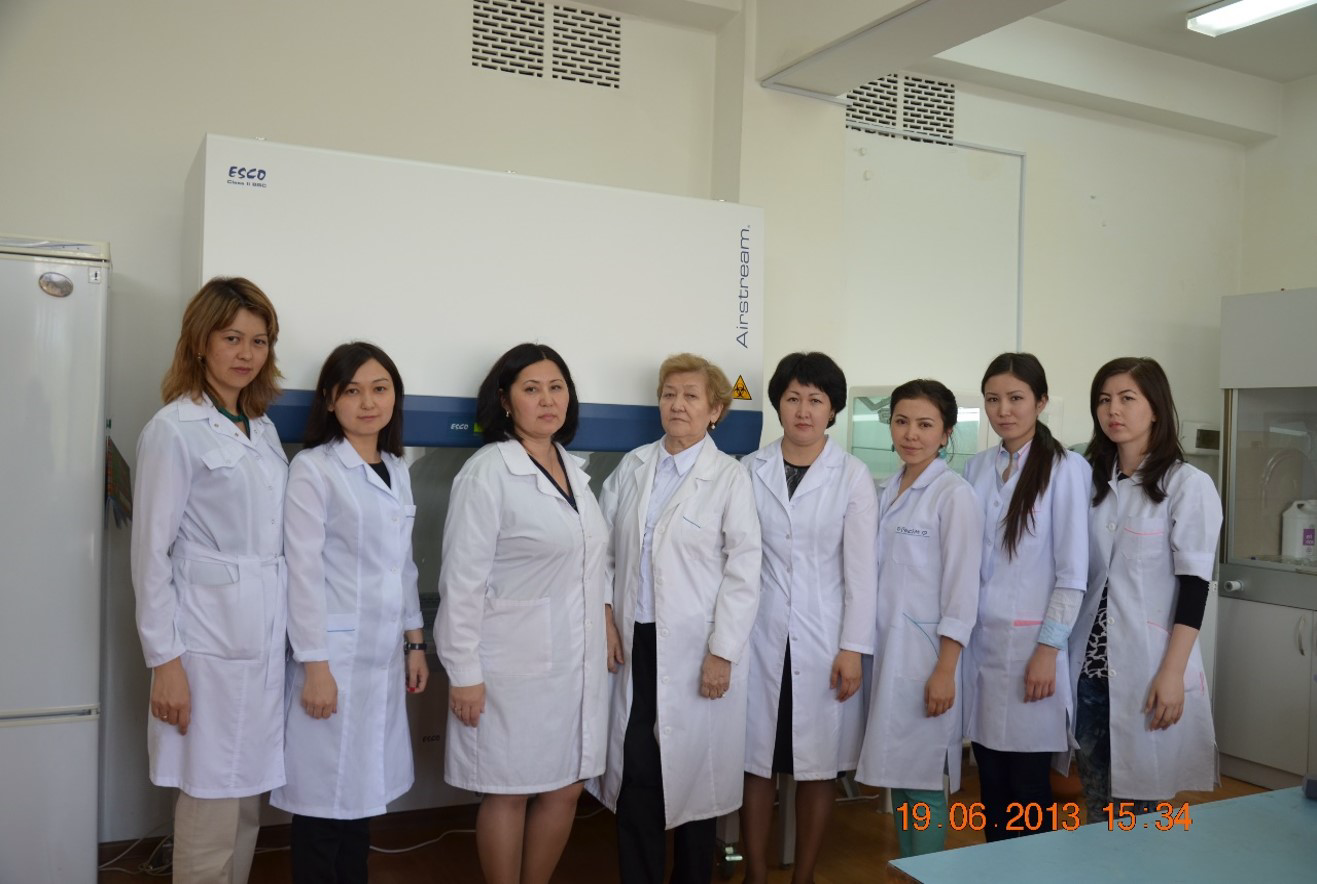
An impressive number of dissertations have been completed and defended under Azhar Akhmetovna’s supervision: 5 doctoral dissertations, more than 20 Candidate of Sciences dissertations, and 3 PhD dissertations. Her students include scientists who are already widely recognized today: D.B. Dzhusupova and G.K. Kaiyrmanova (bioremediation of environmental sites), B.K. Zayadan (the role of phototrophic microorganisms in aquatic ecosystems), I.S. Savitskaya (probiotic dietary supplements), and S.M. Tazhibayeva (colloid-chemical properties of biodispersions). The Department of Biotechnology that she founded is now headed by her student, Associate Professor Aida Kistaubayeva, embodying continuity between teacher and student. Together with scientists from Aachen University of Applied Sciences (Germany), Azhar Akhmetovna participated in the training of three Doctors of Philosophy (PhD). She serves on the editorial boards of the journals ‘Biotechnology. Theory and Practice’, ‘Science of Central Asia,’ and ‘International Journal of Biology and Chemistry,’ as well as on the editorial board of the ‘Molecular and Biological Machine’ monograph series published by Springer-Verlag GmbH Berlin Heidelberg. The scientist’s body of work comprises more than 500 publications, of which over 40 are indexed in Scopus and over 20 in Web of Science.
Azhar Akhmetovna is a multifaceted person. She is the author of the book ‘Akhmet Zhubanov—the Great Son of the Kazakh People,’ published in Kazakh, Russian, English, and French, as well as the screenplay for the documentary film ‘Akhmet Zhubanov,’ produced by the Kazakhfilm studio. The professor actively participates in national conferences on gender equality, the education of young people, and the preservation of national traditions, and regularly publishes journalistic articles. For her significant contribution to science and education, Azhar Zhubanova was awarded the badge of the Ministry of Education and Science of the Republic of Kazakhstan ‘Honorary Worker of Education of the Republic of Kazakhstan’ in 2006; in 2007, she received the state grant ‘Best University Teacher’; and in 2008, she was awarded the ‘10th Anniversary of Astana’ badge. In 2009, on the occasion of the 75th anniversary of Al-Farabi Kazakh National University, she was awarded the Grand Silver Medal, and in 2013, the Order of Kurmet.
On the eve of the 90th anniversary of thescientist butemy of Sciences of the Republic of Kazakhstan, turning to the life journey of Azhar Akhmetovna Zhubanova means not merely recalling the biography of an individual scientist, but reflecting on an entire era of Kazakhstan’s science and its continuation through her students. The path from the idea of producing humus from coal waste to international publications in highly ranked scientific journals is eloquent evidence that Kazakhstan’s science is developing continuously, linking generations of researchers with a living thread.
Gulmira Sultanbayeva
professor